
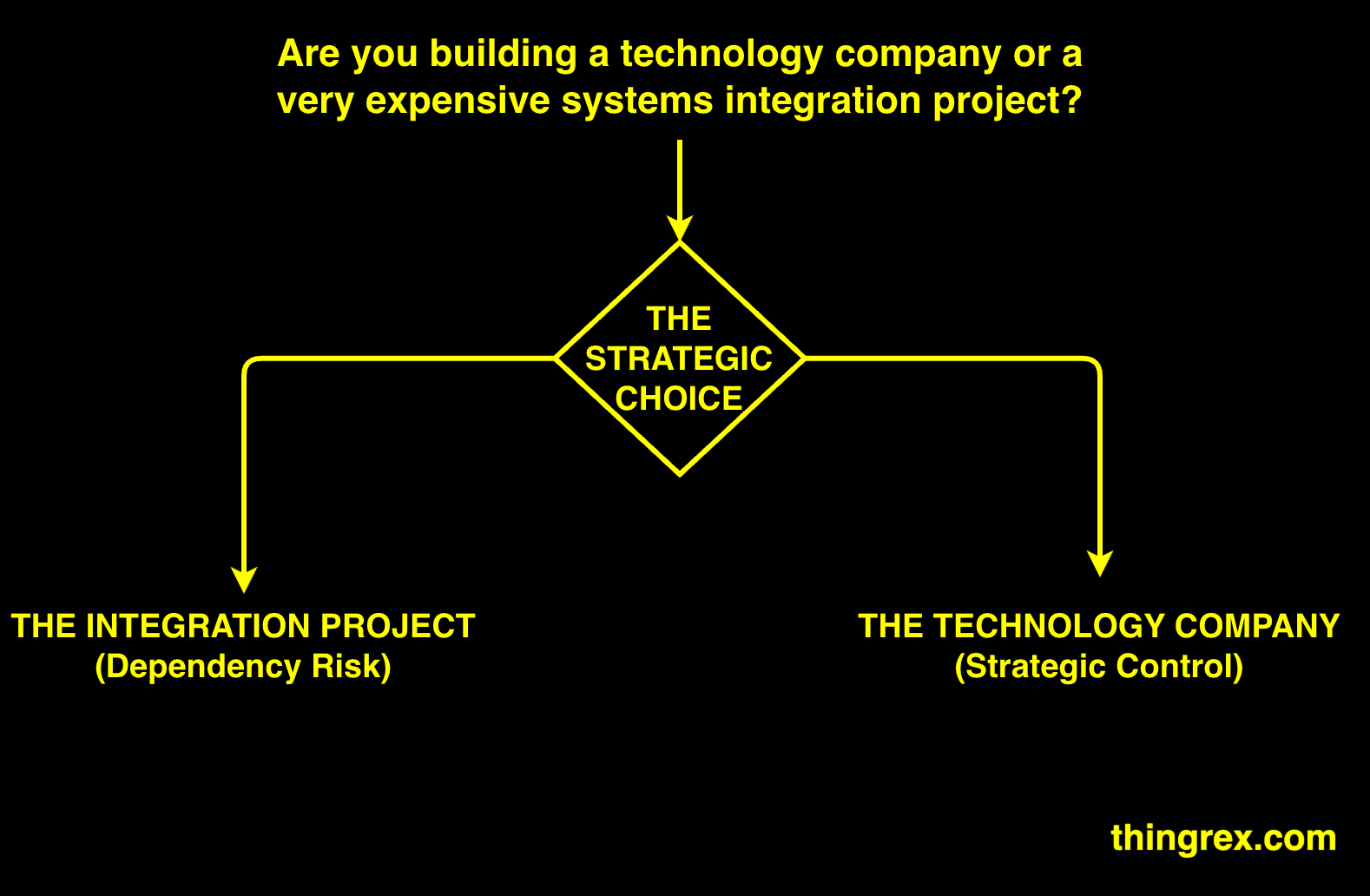
In hardware-enabled startups, No-Code / Low-Code feels like speed. Dashboard + Workflow + Database = “Product.”
That is the short-term mindset. But in real-world operations (fleets, sensors, factories), renting your core platform isn’t a strategy. It is a dependency risk.
If your software manages physical assets, owning your technical stack is a business decision, not just an engineering one.
Here is the business case:
1. Valuation (What investors underwrite)
Investors don’t pay for wrappers. If your differentiation lives inside a 3rd-party platform you don’t control, you don’t own the Core IP.
You rent it.
Result: You are building an expense, not an asset.
2. Operational Survival (Uptime is control)
When a vendor changes pricing, deprecates a feature, or has an outage:
- A marketing app loses leads.
- An operational platform stops the business.
Trucks don’t move. Sensors go dark. Escalations spike.
Result: If you don’t own your system, you don’t own your uptime.
3. Unit Economics (Margin is architecture)
Renting is cheap at 100 devices.
At 10,000 devices, per-message / per-device pricing becomes a tax on growth.
Result: Owning the stack is how you decouple revenue growth from infrastructure fees.
The Rule of Thumb:
✅ Rent the commodities (Email, CRM, Billing).
🛑 Own the core (Device Connectivity, Data Ingestion, Operational Logic).
If you outsource the “brain” of your operation, you aren’t a tech company. You are a tenant.
Is your architecture an asset you own or a landlord you pay?